Choosing a Floor Scale: Capacity, Deck Size and Ramps | Scales Galore
Sales
25-Nov-26
Table of contents
capacity to your heaviest load, then add headroom
Deck size is set by the footprint, not the weight
Platform, pallet, or floor: the terms overlap more than they divide
Getting the load on and off: ramps, pits, and lift decks
Accuracy, load cells, and what changes after installation
Calibration is a running cost, not a one-time step
When the scale has to be legal for trade
Matching the scale to the environment
Frequently asked questions
Key takeaways
- Specify capacity above your heaviest load, not at it. Routine handling puts brief forces on the deck higher than the static weight.
- Deck size is driven by the footprint of what you weigh, not its weight. A load that overhangs the deck reads inaccurately.
- Ramps are cheapest but consume floor space, which is usually the tighter constraint. Pits trade that space cost for civil work.
- Calibration is a recurring operating cost. Build it into the purchase decision rather than discovering it later.
- If the weight determines what someone pays, the scale has to be certified for commercial use, which narrows the options early.
Knowing how to choose a floor scale comes down to three decisions: how much capacity headroom you need above your heaviest load, how large the deck has to be for what actually sits on it, and how the load gets on and off. Get those three right and the rest of the specification follows. Get one wrong and you end up with equipment that either reads inaccurately or slows the operation down.
Size capacity to your heaviest load, then add headroom
The most common specification error is buying to the heaviest load rather than above it.
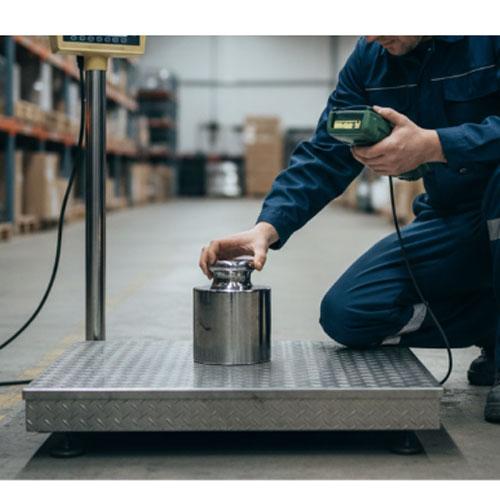
Rated capacity is the maximum static weight a scale is built to measure accurately. It is not a safety limit and it is not a ceiling you should plan to operate near. Loads rarely arrive gently. A pallet jack setting a load down, a forklift releasing before the deck takes the full weight, a drum rolled onto the platform: each of these puts a brief force on the deck higher than the static weight of the load itself. Specify at rated capacity and routine handling will push you past it several times a day.
Work out the heaviest load you expect to weigh, then specify above it with margin for that shock loading and for future growth.
Two other things belong in this calculation. When you weigh a pallet, the scale weighs everything on the deck, so count the pallet, container, or drum and not just the product. And check the safe overload limit in the manufacturer's specification, which is a separate figure from rated capacity and tells you what the structure tolerates before damage rather than what it measures accurately.
Deck size is set by the footprint, not the weight
Capacity and deck size are independent decisions, and people routinely collapse them into one. A heavy load is not necessarily a large one. A drum of liquid and a pallet of packaging can weigh the same and need very different decks.
The rule is that the load should sit fully within the deck, with clearance on all four sides. A load that overhangs the platform edge does not distribute its weight across the load cells the way the scale was designed for, and the reading suffers. Overhang also means the load can foul the frame or catch a ramp edge during handling.
Measure the largest footprint you handle, not the typical one. If most of your traffic is standard pallets but you take occasional oversized crates, the crates set the deck size. Scales Galore stocks floor scale sizes
2x2 up to 8x8 feet, which covers the standard pallet range and the outsized loads at either end of it.
Drums are the exception worth calling out. The weight is high, the footprint is small and circular, and it is awkward to centre on a rectangular deck. Purpose-built
drum scales handle that geometry properly.
Platform, pallet, or floor: the terms overlap more than they divide
These names get used interchangeably, and mostly that is fine, because the distinction is about application rather than a hard technical boundary.
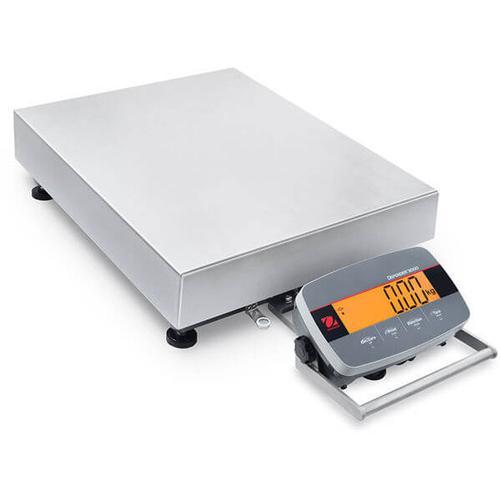
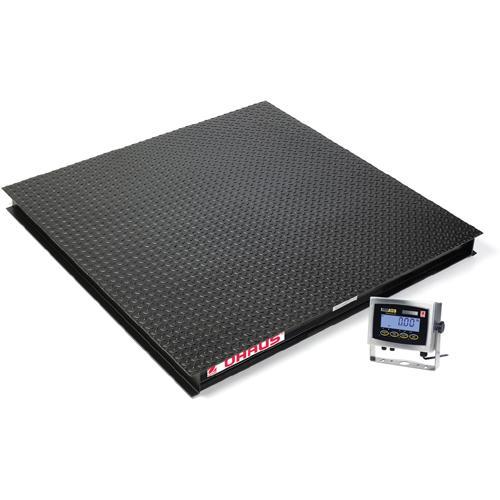
A platform scale is the broad category: a flat weighing surface supported by load cells beneath it. A floor scale is a platform scale built to sit at or near floor level so loads can be rolled or driven onto it rather than lifted. A pallet scale is a floor scale sized and configured for pallets specifically.
What matters when you are specifying is not the label. It is deck height, deck size, capacity, and how the load arrives. A supplier listing something as a platform scale and another listing the same machine as a floor scale are describing the same equipment. Compare the specifications rather than the names.
Getting the load on and off: ramps, pits, and lift decks
Every floor scale sits above the floor by some amount, and the whole question is how you bridge that height.
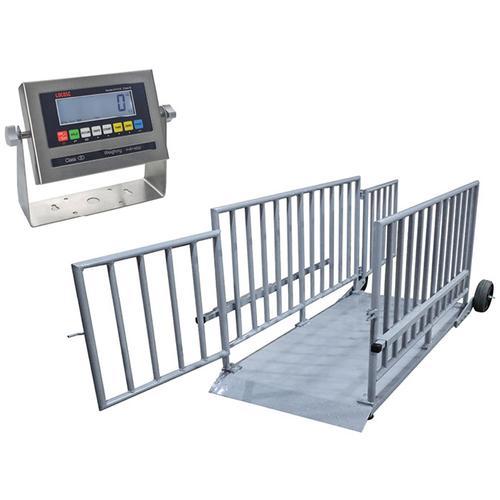
Ramps are the simplest and cheapest answer. They also consume floor space, and in most facilities floor space is the real constraint rather than budget. A ramp needs a run proportional to the deck height, and you need that run clear on at least one side, often two if traffic flows through rather than reversing out. Before specifying ramps, measure the aisle.
Pit mounting sets the deck flush with the floor, which removes the ramp entirely and lets traffic cross from any direction. The cost moves from floor space to civil work, since the pit has to be cut, formed, and drained. Pits also need cleaning access, and in wet or food environments drainage is a specification item rather than an afterthought.
Lift-top decks raise the deck for cleaning underneath, which matters where debris or washdown water collects.
Lift-top deck models cost more up front and earn it back in environments where cleaning under a fixed deck would otherwise be a two-person job.
Where floor space is tight and loads arrive on pallets,
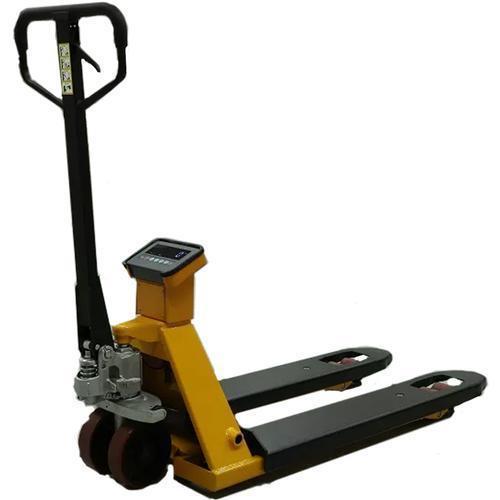
pallet beam scales are worth considering. They are two beams the pallet sits across, so there is no deck and no ramp at all.
Accuracy, load cells, and what changes after installation
A floor scale measures weight through load cells, typically one at each corner of the deck. Each cell reads the portion of the load above it, and the indicator sums them.
That design is why load positioning matters. A scale is calibrated on the assumption that load is distributed across all the cells. Put the weight hard into one corner and that cell carries a disproportionate share, which is where corner-loading error comes from. Well-built scales compensate for this in calibration, and it is one of the things separating a properly specified industrial scale from a cheap one.
It is also why the floor underneath matters more than people expect. Load cells need every mounting point bearing evenly, so a deck on an uneven floor will have one foot carrying less than its share and will read inconsistently no matter how good the cells are. Check floor flatness before you order.
Calibration is a running cost, not a one-time step
Floor scale calibration is the step buyers most often leave out of the decision, and it is the one that shows up every year afterwards.
A scale is calibrated by applying known reference weights and adjusting the indicator until the displayed value matches. Doing it properly means certified
calibration weights traceable to a recognized standard, not a load you assume is accurate.
Calibration drift is normal. It comes from temperature change, from mechanical stress and shock loading, from debris under the deck, and from ordinary wear. How often you need to recalibrate depends on how hard the scale works, how stable the environment is, and whether the weights you produce carry commercial or regulatory consequences. A scale weighing outbound shipments that determine invoices needs a tighter schedule than one doing rough inventory checks.
Build that schedule and its cost into the purchase decision rather than discovering it later.
When the scale has to be legal for trade
If the weight your scale produces determines what someone pays, the scale generally has to be certified for commercial use, which in the United States means NTEP certification and periodic verification by a licensed authority.
This is a regulatory question rather than a quality one, and it is worth resolving before you shortlist equipment, since it narrows the options. We have covered what
legal for trade and NTEP certification mean in detail separately.
Matching the scale to the environment
The last specification decision is what the scale has to survive.
In dry warehouse and shipping use, a painted mild steel deck is usually adequate. In wet, washdown, or corrosive conditions,
stainless steel floor scales are the durable answer, and the enclosure rating on the load cells and indicator matters as much as the deck material. Our explainers on
IP rating and
NEMA rating cover how to read those figures.
Where flammable vapours, dusts, or solvents are present, standard electrical equipment is not appropriate and the requirement is
explosion proof and intrinsically safe scales rated for the specific hazardous location classification.
Frequently asked questions
What is a floor scale used for?
Weighing loads too heavy or too large to lift onto a bench scale. Typical uses are pallets in warehousing and shipping, drums and containers in chemical and food processing, and bulk material and parts in manufacturing. The defining feature is that the load is rolled, driven, or set down onto the deck rather than lifted onto it.
How accurate are floor scales?
Accuracy is stated as a division size, meaning the smallest increment the scale displays, and it is proportional to capacity. A higher-capacity scale reads in larger increments. Sustained accuracy depends as much on installation and calibration as on the equipment, since an uncalibrated scale on an uneven floor will not perform to its specification regardless of how it is built.
What do I do about an uneven floor?
Address the floor rather than the scale. All mounting points need to bear evenly, and the usual remedies are shimming the feet during installation or pouring a level pad. Where the floor cannot be corrected, a pit installation with a properly formed base removes the problem. Do not leave a foot unloaded and assume calibration will absorb it.
How much does a floor scale cost?
Price is driven by capacity, deck size, deck material, and whether the scale is certified for trade use, so the range across the category is wide. Pit installation and ramps add cost outside the equipment itself. The practical approach is to specify capacity, deck size, and environment first, then compare within that narrowed set.
Compare & Shop Floor Scales
Compare floor scales by capacity, deck size, and deck type, or call to talk through a configuration for your application.
Related Articles
14-Oct-26
How to Choose the Right Livestock Scale for Your Farm or Ranch
Knowing how to choose a livestock scale comes down to three questions, in this order: what you are weighing, how the animal is going to get weighed, and whether the number has to stand up to anyone other than you. Capacity and platform size fall out of the first. The second decides whether you buy a platform or fit load bars to equipment you already own ...
26-Aug-26
Buy American Act vs Trade Agreements Act - How Scale Purchases Are Affected
Federal procurement rules can stall a straightforward scale purchase when the wrong compliance framework is applied from the start. Whether you are outfitting a receiving dock, a warehouse floor, or a production line under a government contract, understanding the difference between the Buy American Act and the Trade Agreements Act determines which products you can buy, from where, and through which purchasing channels. ...
25-Aug-26
Best Scales for Military Bases, Depots, and Logistics Centers
Military installations move a constant flow of supplies—ammunition, parts, fuel-related materials, food service loads, and outbound shipments—often under tight timelines and strict controls. Choosing the right military base scales isn’t just about capacity; it’s about meeting DoD scale requirements, maintaining accuracy in harsh environments, and simplifying procurement. ...
29-Jun-26
Common Mistakes Agencies Make When Purchasing Scales on GSA.gov
In today’s procurement-driven environment, purchasing agents for government agencies must be vigilant, especially when procuring scales through GSA.gov. While GSA contracts streamline the buying process, ensuring compliance, accuracy, and proper product selection is still crucial Below, we’ll discuss common scale purchasing mistakes on GSA Advantage and provide insights to avoid procurement pitfalls. ...
29-Apr-26
What Documentation Government Buyers Need When Purchasing Scales
Here is a clear checklist of the most common government scale purchase documentation that agencies request, including GSA scale documentation requirements, scale compliance documentation government expectations, and calibration documentation government scales best practices ...
16-Mar-26
GSA Scale Vendors: What to Look for Before You Buy?
Learn what to look for in GSA-approved scale vendors. From compliance and GSA contract coverage to post-purchase calibration support, discover the key factors to consider before you buy industrial scales for government use. ...
09-Mar-26
GSA-Approved Scales: What Compliance Requirements Matter Most?
Purchasing scales for government use isn't as simple as picking a reliable product off the shelf. Compliance requirements for GSA-approved scales are strict to ensure accuracy, reliability, and adherence to federal guidelines. Whether you're looking for NTEP-certified scales, NIST compliance, ISO certifications, or navigating the Buy American Act and TAA requirements, understanding these standards is essential. ...
17-Feb-26
How to Justify a Scale Purchase in a Government Procurement Request
Government agencies purchase scales for a wide range of operational needs — from logistics and warehousing to inspection, manufacturing, and regulated environments. However, unlike commercial purchases, government acquisitions must be clearly justified, properly documented, and aligned with applicable compliance standards. ...
28-Nov-11
HLWP IP65 Waterproof food service Scale
AND is renowned for its innovations and quality products used in science, medicine, research, and the home. The AND Weighing Division is an ISO 9001 certified company ...
15-Nov-11
Sartorius M-PROVE line of economical portable balances
Sartorius, a leader in laboratory mechanics for over a century, has recently introduced a line of economical portable balances called the M-Prove series. The M-Prove balances were developed to be accurate for use in laboratory applications yet rugged enough to take on the road. ...
14-Nov-11
Ohaus Scout Pro line of scales
The Ohaus scout pro has been one of the longest and best selling scales for portable and stationary weighing. ...