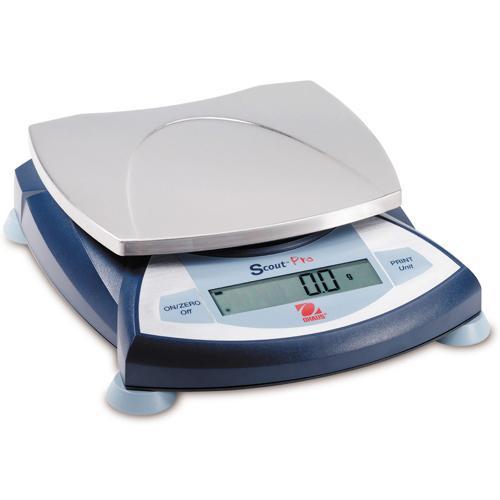
Balances have the ability to measure up to one tenth or a milligram (one ten thousandth of a gram).
Sales
03-May-18
In a laboratory setting, the use of an
analytical balance is crucial in weighing chemicals that will be part of various chemical reactions. Each chemical reaction requires the reactants to hold an exact weight in order to successfully carry out the equation and yield the desired results. Weighing chemicals on a balance requires some basic, indispensable steps that one must adhere to for the best results, while keeping in mind that weighing chemicals inaccurately can lead to hazardous reactions.
Balances have the ability to measure up to one tenth or a milligram (one ten thousandth of a gram). This may not hold true for floor scales, digital scales, or basic gram scales. On the balance there is a tare button which is used to bring the balance back to zero. Pressing the tare button is the first step, and one should be extremely careful not to overlook this. The balance may be accurate, but if it starts out at anything other than zero, the chemical will be weighed incorrectly. When a chemical is being weighed in a small dish or pan, this container must be placed on the balance and the tare button should be pressed to bring the weight to zero; the point being to exclude the weight of the container from the weight of the chemical substance. In addition, containers must be dry inside and out, as a droplet of water could affect the weight and once it dries the weight will be undervalued. It is not uncommon to have ovens in the laboratory for the very purpose of drying substances before weighing them on the weighing scale balance. Certain industrial scales may be able to withstand environmental factors as slight as a draft in the air, but the balance is extremely sensitive, and this cannot be understated.
To assure that a chemical is weighed to the highest degree of accuracy, it may pass from one balance to the next with a weight given from five or more balances. It is necessary to move the substance from one balance to the next using the appropriate methods of transfer. This means that any oil or residue on the fingers should not come into contact with the substance and the container it rests in. Due to the sensitivity of the balance, any minute factor could shift the weight of the chemical substance. Keeping a chemical substance capped can help prevent moisture from the air affecting the measurement.
All precautions must be taken to assure that the reactants are properly measured on the digital scale balance. The methods discussed above are not all inclusive but they do illustrate the fundamentals of using a balance to measure a chemical substance. These methods are not optional, but rather necessary in carrying out successful chemical reactions.
Related Articles
16-Mar-26
GSA Scale Vendors: What to Look for Before You Buy?
Learn what to look for in GSA-approved scale vendors. From compliance and GSA contract coverage to post-purchase calibration support, discover the key factors to consider before you buy industrial scales for government use. ...
09-Mar-26
GSA-Approved Scales: What Compliance Requirements Matter Most?
Purchasing scales for government use isn't as simple as picking a reliable product off the shelf. Compliance requirements for GSA-approved scales are strict to ensure accuracy, reliability, and adherence to federal guidelines. Whether you're looking for NTEP-certified scales, NIST compliance, ISO certifications, or navigating the Buy American Act and TAA requirements, understanding these standards is essential. ...
17-Feb-26
How to Justify a Scale Purchase in a Government Procurement Request
Government agencies purchase scales for a wide range of operational needs — from logistics and warehousing to inspection, manufacturing, and regulated environments. However, unlike commercial purchases, government acquisitions must be clearly justified, properly documented, and aligned with applicable compliance standards. ...
28-Nov-11
HLWP IP65 Waterproof food service Scale
AND is renowned for its innovations and quality products used in science, medicine, research, and the home. The AND Weighing Division is an ISO 9001 certified company ...
15-Nov-11
Sartorius M-PROVE line of economical portable balances
Sartorius, a leader in laboratory mechanics for over a century, has recently introduced a line of economical portable balances called the M-Prove series. The M-Prove balances were developed to be accurate for use in laboratory applications yet rugged enough to take on the road. ...
14-Nov-11
Ohaus Scout Pro line of scales
The Ohaus scout pro has been one of the longest and best selling scales for portable and stationary weighing. ...