How to Justify a Scale Purchase in a Government Procurement Request
Scale Blog User
17-Feb-26
Government agencies purchase scales for a wide range of operational needs — from logistics and warehousing to inspection, manufacturing, and regulated environments. However, unlike commercial purchases, government acquisitions must be clearly justified, properly documented, and aligned with applicable compliance standards
This guide explains how to justify a scale purchase in a government procurement request, including what to document, how to write effective specification language, and which compliance requirements to reference to support approval.
Why Proper Justification Matters in Government Scale Purchases
Scale purchases may appear straightforward, but they often fall under scrutiny during procurement review, audits, or inspections. Inadequate justification can result in:
- Delayed approvals
- Rejected purchase requests
- Compliance findings during audits
- The need to rebid or reprocure equipment
A well-documented justification demonstrates that the purchase is:
- Necessary for mission execution
- Technically appropriate for the intended use
- Compliant with applicable regulations
- Cost-effective and defensible

Step 1: Define the Operational Need Clearly
Every procurement justification should begin with a clear operational requirement, not a product preference.
Examples of valid operational needs:
- Accurate weighing for shipping, receiving, or inventory control
- Legal-for-trade weighing in regulated transactions
- Compliance with inspection or labeling requirements
- Replacement of obsolete or non-compliant equipment
Best practice:
Describe what the scale must do, where it will be used, and why accuracy matters to the agency's mission
Example:
"The facility requires a commercial floor scale capable of accurately weighing palletized shipments to support logistics operations and ensure compliance with applicable measurement standards."
Step 2: Use Clear, Defensible Scale Specification Language
Well-written specifications help reviewers understand that the scale was selected based on functional requirements - not vendor bias
Common specification elements to include:
- Capacity and readability (e.g., maximum load and increment size)
- Platform dimensions
- Environmental conditions (indoor, outdoor, washdown, etc.)
- Intended application (warehouse, laboratory, inspection, shipping)
Avoid:
- Brand-only language unless properly justified
- Over-specifying features that are not mission-critical
- Vague terms like "high accuracy" without measurable criteria
- Specifications should be objective, measurable, and auditable.
Step 3: Reference Applicable Compliance Requirements
Compliance is often the most important part of a government scale justification.
Common compliance standards to reference:
NTEP Certification
Required for legal-for-trade applications where weights affect pricing, billing, or regulated transactions.
NIST Handbook 44
Defines technical and performance requirements for commercial weighing devices used in the U.S.
Trade Agreements Act (TAA)
Applies to most GSA Schedule purchases and determines country-of-origin eligibility.
Buy American Act (when applicable)
May apply in non-GSA or specific procurement scenarios.
Tip:
Explicitly stating compliance requirements in the justification reduces follow-up questions during review.
Step 4: Identify Supporting Documentation to Include
Procurement officials and auditors often review documentation long after the purchase is complete. Including the right documents up front strengthens the justification.
Typical supporting documents include:
- Product specification sheets
- Compliance certificates (e.g., NTEP Certificate of Conformance)
- Calibration information or traceability statements
- Operating manuals or technical data
- GSA Schedule listing details (if applicable)
- Maintaining a complete documentation package helps support:
- Procurement approval
- Inspection readiness
- Long-term asset management
Step 5: Explain Why GSA Schedule Purchasing Supports the Request
When applicable, purchasing through the GSA Schedule can significantly strengthen a procurement justification
GSA Schedule advantages to note:
- Pre-negotiated pricing
- Verified vendor eligibility
- Built-in TAA compliance
- Streamlined ordering and approval
Including GSA purchasing authority in the justification demonstrates that the acquisition aligns with federal procurement best practices and reduces administrative burden.
Step 6: Address Replacement vs. New Purchase (If Applicable)
If the scale is replacing existing equipment, the justification should briefly explain why recalibration or repair is insufficient.
Common justifications include:
- Equipment no longer meets accuracy requirements
- Obsolete or unsupported components
- Inability to maintain compliance
- Increased maintenance costs
- This shows fiscal responsibility and lifecycle awareness
Common Pitfalls to Avoid
When justifying a scale purchase, agencies should avoid:
- Omitting compliance references
- Using vague or subjective language
- Failing to document operational need
- Selecting equipment without lifecycle considerations
- Clear, concise, and documented justifications reduce approval time and audit risk.
Final Thoughts
Justifying a scale purchase in a government procurement request is not about selling a product - it's about demonstrating necessity, compliance, and accountability.
By clearly defining the operational need, using defensible specification language, referencing applicable standards, and including proper documentation, agencies can streamline approvals and ensure long-term compliance.
For government buyers, a well-justified scale purchase supports both mission execution and regulatory responsibility. Vendors such as Scales Galore support this process by providing compliant weighing equipment, clear documentation, and procurement-ready information aligned with government requirements.
Related Articles
28-Nov-11
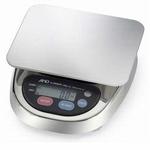
HLWP IP65 Waterproof food service Scale
AND is renowned for its innovations and quality products used in science, medicine, research, and the home. The AND Weighing Division is an ISO 9001 certified company ...
15-Nov-11
Sartorius M-PROVE line of economical portable balances
Sartorius, a leader in laboratory mechanics for over a century, has recently introduced a line of economical portable balances called the M-Prove series. The M-Prove balances were developed to be accurate for use in laboratory applications yet rugged enough to take on the road. ...
14-Nov-11
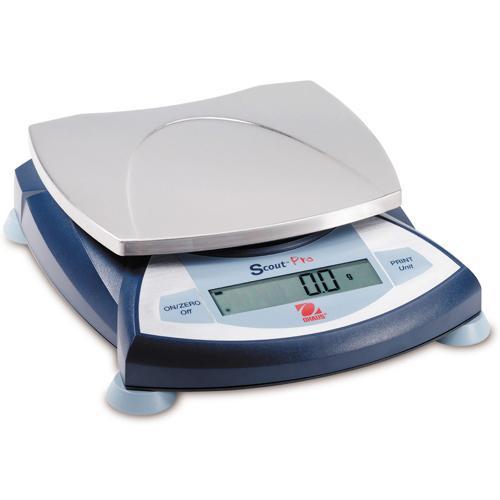
Ohaus Scout Pro line of scales
The Ohaus scout pro has been one of the longest and best selling scales for portable and stationary weighing. ...