When to Replace vs. Recalibrate Government Scales: A Compliance Guide | Scales Galore
Sales
29-Oct-26
The decision to recalibrate or replace a scale may appear to be a routine maintenance call, but in government and regulated environments, it carries real compliance weight. A scale that repeatedly fails calibration, holds readings inconsistently, or lacks the documentation chain to support its accuracy history creates institutional liability -- not just an equipment problem. Understanding when government scale recalibration is the right answer and when replacement is the more defensible choice helps facilities protect program integrity, manage budgets, and maintain the documentation standards that inspections demand.
This guide addresses the operational and compliance factors that should drive the replace vs. recalibrate decision for government facilities, including federal agencies, military operations, and contractors operating under regulated procurement frameworks.
Importance of Scale Accuracy in Government Operations
Government facilities rely on scales across a wide range of critical functions -- from food service weighing at military dining facilities and commissaries, to laboratory measurements at federal research sites, to materials processing and receiving at government-owned warehouses and depots. In each of these settings, scale accuracy is not a performance preference; it is a compliance obligation.
Federal scale calibration requirements are defined primarily through NIST Handbook 44, which establishes the performance specifications, tolerance classes, and testing requirements for commercial and regulated weighing equipment. Scales used in transactions affecting commercial value -- including any application where weight determines pricing, billing, or contract fulfillment -- must meet legal-for-trade standards and carry valid NTEP certification for their model class
Beyond the transactional context, scale accuracy maintenance matters at the programmatic level. Inaccurate weighing creates downstream errors in inventory, procurement reporting, quality control, and regulatory submissions. When those errors surface during an inspection or contract audit, the facility bears the burden of explaining not only the discrepancy -- but also why its weighing program allowed it to occur.
That burden becomes significantly harder to carry when the scale's calibration and maintenance history is incomplete, inconsistent, or missing entirely. A scale that drifts out of tolerance without a documented corrective response is not just an equipment problem -- it is a gap in the institutional record that connects every measurement the scale has produced to a compliance question the facility may not be able to answer.
Signs Recalibration Is Sufficient
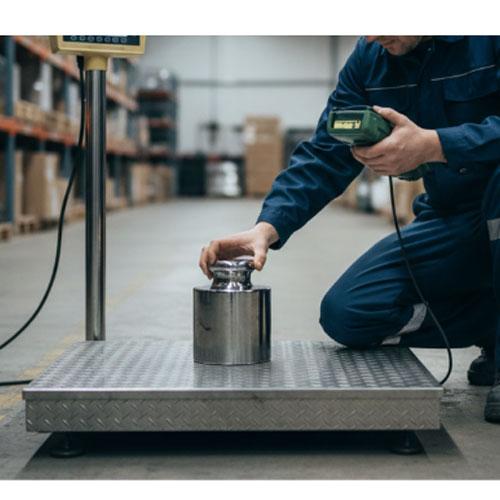
Recalibration is the correct response when the underlying equipment is mechanically sound and the observed deviation falls within a correctable range. A well-maintained scale that passes calibration consistently is an asset -- replacing it unnecessarily creates cost and documentation disruption without improving compliance performance.
Recalibration is typically the appropriate choice when the following conditions are present:
- The scale passes a physical inspection with no structural damage to the frame, platform, or load cell housing. Surface wear and cosmetic issues do not affect accuracy, but cracks, impact damage, or corrosion that has reached internal components require further evaluation before recalibration alone is considered sufficient.
- Observed drift is minor and falls within the correctable tolerance for the scale's accuracy class under NIST Handbook 44. Minor span drift over time is normal behavior for load cell-based equipment and is addressable through a calibration adjustment.
- The calibration history shows consistent performance across prior intervals. A scale that has held calibration well over multiple cycles and is presenting its first out-of-tolerance reading after an extended period of heavy use is a strong recalibration candidate.
- The equipment is within its expected service life for its load cell type, environmental rating, and manufacturer specifications. Industrial scale recalibration makes economic sense when the unit still has meaningful service life ahead of it.
- No recent events -- impacts, overloads, flooding, or temperature extremes -- are documented that could explain a sudden change in performance outside of normal drift.
Recalibration also makes sense when the scale model is still supported by the manufacturer, replacement parts are available, and a qualified calibration provider can return the unit to tolerance with documented NIST traceability. When all of these factors align, recalibration is not only sufficient -- it is the cost-effective, compliance-consistent choice.
When Replacement Is the Better Option
There are circumstances where recalibration addresses only the symptom, not the underlying problem. Government procurement officers and facility managers need to recognize those circumstances early, because delaying a necessary replacement decision creates compounding compliance risk and documentation complexity.
Replacement is the more defensible choice when any of the following conditions apply:
- The scale fails to hold calibration between certified intervals. A scale that is calibrated in the morning and reads out of tolerance by the afternoon has a mechanical or structural problem that adjustment alone cannot resolve. Repeated short-interval calibration failures are the clearest operational signal that replacement is the right path.
- Physical damage to the load cell, strain gauge, or internal components is confirmed. Load cells that have been overloaded, impacted, or exposed to moisture intrusion will drift unpredictably and cannot be returned to reliable performance through calibration adjustment.
- The equipment has exceeded its useful service life or the manufacturer has discontinued support for the model. When spare parts are unavailable and service intervals stretch due to parts sourcing delays, the maintenance program begins to create the compliance gaps it was designed to prevent.
- The scale cannot be returned to tolerance through adjustment. Some out-of-tolerance conditions reflect mechanical wear or load cell fatigue that calibration cannot compensate for. When a calibration provider documents that a scale was adjusted to the limit of available span and remains marginal, replacement is the professional recommendation that follows.
- The scale lacks the connectivity, output capability, or environmental rating required for its current application. A unit that was adequate for a previous workflow but now falls short of the documentation or integration requirements of the current regulatory environment is a compliance risk regardless of its mechanical condition.
- The cost of corrective maintenance and calibration within the current service cycle approaches or exceeds the procurement cost of a replacement unit -- particularly relevant in GSA procurement contexts where replacement options are accessible at pre-negotiated contract prices.
When to replace industrial scales is ultimately a question of whether the existing equipment can reliably support the compliance documentation the program requires -- not just whether it can be made to read accurately at the moment of calibration.
Compliance and Cost Considerations
The financial calculus of replace vs. recalibrate scales in government contexts is more complex than a unit cost comparison. Compliance exposure, total cost of ownership, and procurement process timelines all factor into the decision.
On the compliance side, a scale with a broken calibration history -- multiple out-of-tolerance events, missed calibration intervals, or gaps in maintenance records -- represents institutional risk that extends well beyond the cost of the equipment. Government contracts, audit findings, and corrective action requirements all carry administrative costs that dwarf the price of a scale. Facilities that treat compliance issues recalibrating scales as recurring maintenance events rather than addressing root cause often discover this at the worst possible time: during an inspection or a contract performance review.
On the cost side, government facility managers should evaluate scale replacement decisions using a total cost of ownership framework rather than comparing acquisition cost to a single calibration visit. That framework includes:
- Cumulative calibration costs over the projected service life of the replacement unit vs. the ongoing calibration and corrective maintenance cost of the current unit
- Downtime associated with repeated out-of-tolerance events and the operational impact of unplanned scale outages on production, receiving, or program delivery
- Administrative labor associated with managing an extended out-of-tolerance documentation trail vs. a clean equipment transition record
- GSA Multiple Award Schedule pricing for replacement units, which may substantially reduce the effective acquisition cost compared to open-market alternatives
- Service contract or calibration agreement availability for new equipment vs. aging units that may require bespoke service arrangements with extended lead times
For facilities procuring through GSA, replacement decisions can often be executed with shorter lead times and lower administrative burden than open-market procurement. That practical advantage changes the threshold at which replacement becomes more attractive than continued maintenance investment -- and it is a factor that should be included in any formal cost analysis before committing to another service cycle on a unit with a troubled calibration record.
Documentation Impacts
Whether a facility recalibrates or replaces, the documentation requirements are non-negotiable -- but the nature and structure of those records differ in important ways depending on which path is taken.
For recalibration, documentation must capture:
- The date and scope of the calibration event
- Identification of the calibration technician and the calibration provider's NIST traceability certificate
- Pre- and post-calibration readings at multiple test points across the scale's operating range
- Any adjustments made during the calibration event, including the magnitude and direction of span or zero corrections
- Pass/fail determination and the technician's professional assessment of the scale's condition and recommended next service interval
The documentation impact of a replacement decision is manageable if it is handled systematically -- but it is a meaningful administrative step that requires coordination between the facility's equipment management program, calibration provider, and procurement records. Attempting to close a replacement without completing the full commissioning trail creates precisely the type of gap that auditors are trained to identify.
The goal in either path is the same: an unbroken, attributable record that demonstrates the facility's weighing program was in control at every moment a regulated measurement was made.
Conclusion
The replace vs. recalibrate decision is one of the most consequential routine choices a government facility's maintenance and compliance programs will face. Getting it right requires more than a cost comparison -- it requires an honest assessment of the equipment's mechanical condition, its calibration history, its place in the facility's compliance documentation, and the true cost of continuing to service a unit that may no longer be able to meet the standard reliably.
Government scale recalibration is the right answer when the equipment is sound, the drift is correctable, and the documentation trail supports it. Replacement is the right answer when the scale can no longer reliably sustain the compliance record the program depends on -- regardless of what it reads at the moment of calibration.
Scales Galore carries a full range of NTEP-certified industrial, floor, and bench scales appropriate for government and regulated applications. Whether your facility needs a single replacement unit or a calibration-ready equipment refresh across multiple locations, the right procurement decision starts with understanding the compliance requirement -- and matching the equipment to it.
Related Articles
14-Oct-26
How to Choose the Right Livestock Scale for Your Farm or Ranch
Knowing how to choose a livestock scale comes down to three questions, in this order: what you are weighing, how the animal is going to get weighed, and whether the number has to stand up to anyone other than you. Capacity and platform size fall out of the first. The second decides whether you buy a platform or fit load bars to equipment you already own ...
26-Aug-26
Buy American Act vs Trade Agreements Act - How Scale Purchases Are Affected
Federal procurement rules can stall a straightforward scale purchase when the wrong compliance framework is applied from the start. Whether you are outfitting a receiving dock, a warehouse floor, or a production line under a government contract, understanding the difference between the Buy American Act and the Trade Agreements Act determines which products you can buy, from where, and through which purchasing channels. ...
25-Aug-26
Best Scales for Military Bases, Depots, and Logistics Centers
Military installations move a constant flow of supplies—ammunition, parts, fuel-related materials, food service loads, and outbound shipments—often under tight timelines and strict controls. Choosing the right military base scales isn’t just about capacity; it’s about meeting DoD scale requirements, maintaining accuracy in harsh environments, and simplifying procurement. ...
29-Jun-26
Common Mistakes Agencies Make When Purchasing Scales on GSA.gov
In today’s procurement-driven environment, purchasing agents for government agencies must be vigilant, especially when procuring scales through GSA.gov. While GSA contracts streamline the buying process, ensuring compliance, accuracy, and proper product selection is still crucial Below, we’ll discuss common scale purchasing mistakes on GSA Advantage and provide insights to avoid procurement pitfalls. ...
29-Apr-26
What Documentation Government Buyers Need When Purchasing Scales
Here is a clear checklist of the most common government scale purchase documentation that agencies request, including GSA scale documentation requirements, scale compliance documentation government expectations, and calibration documentation government scales best practices ...
16-Mar-26
GSA Scale Vendors: What to Look for Before You Buy?
Learn what to look for in GSA-approved scale vendors. From compliance and GSA contract coverage to post-purchase calibration support, discover the key factors to consider before you buy industrial scales for government use. ...
09-Mar-26
GSA-Approved Scales: What Compliance Requirements Matter Most?
Purchasing scales for government use isn't as simple as picking a reliable product off the shelf. Compliance requirements for GSA-approved scales are strict to ensure accuracy, reliability, and adherence to federal guidelines. Whether you're looking for NTEP-certified scales, NIST compliance, ISO certifications, or navigating the Buy American Act and TAA requirements, understanding these standards is essential. ...
17-Feb-26
How to Justify a Scale Purchase in a Government Procurement Request
Government agencies purchase scales for a wide range of operational needs — from logistics and warehousing to inspection, manufacturing, and regulated environments. However, unlike commercial purchases, government acquisitions must be clearly justified, properly documented, and aligned with applicable compliance standards. ...
28-Nov-11
HLWP IP65 Waterproof food service Scale
AND is renowned for its innovations and quality products used in science, medicine, research, and the home. The AND Weighing Division is an ISO 9001 certified company ...
15-Nov-11
Sartorius M-PROVE line of economical portable balances
Sartorius, a leader in laboratory mechanics for over a century, has recently introduced a line of economical portable balances called the M-Prove series. The M-Prove balances were developed to be accurate for use in laboratory applications yet rugged enough to take on the road. ...
14-Nov-11
Ohaus Scout Pro line of scales
The Ohaus scout pro has been one of the longest and best selling scales for portable and stationary weighing. ...