How to Choose the Right Livestock Scale for Your Farm or Ranch
Sales
14-Oct-26
Knowing how to choose a livestock scale comes down to three questions, in this order: what you are weighing, how the animal is going to get weighed, and whether the number has to stand up to anyone other than you. Capacity and platform size fall out of the first. The second decides whether you buy a platform or fit load bars to equipment you already own. The third decides whether certification is on the list at all.
Start with the animal, not the scale
Specifications get chosen backwards more often than not. Someone finds a scale in budget, then works out what it will hold. Start from the herd instead.
Write down the heaviest animal you expect to put on the deck at its mature weight, not its average weight, and not what it weighs today. A scale bought to the current weight of growing stock is a scale you replace. Then add margin above that figure, because animals do not step onto a deck gently. A bull loading hard through a gate puts a brief force through the deck well above his standing weight, and specifying at the number rather than above it means routine handling runs the scale past its rating.
Then settle one more thing: are you weighing animals one at a time, or in groups? Individual weights are what you need for gain tracking, dosing, and selling by the head. Group weighing puts several animals on a larger deck and divides, which is faster and fine for a pen average, and useless for anything animal-specific. The answer changes both platform size and system cost, so decide it before comparing equipment. Scales Galore stocks animal and livestock scales up to 5,000 lb, which covers single mature cattle and horses.
Two ways to build the system: platform or load bars
This is the fork most buying decisions never reach, because most listings show platforms and load bars are sold as a separate product.
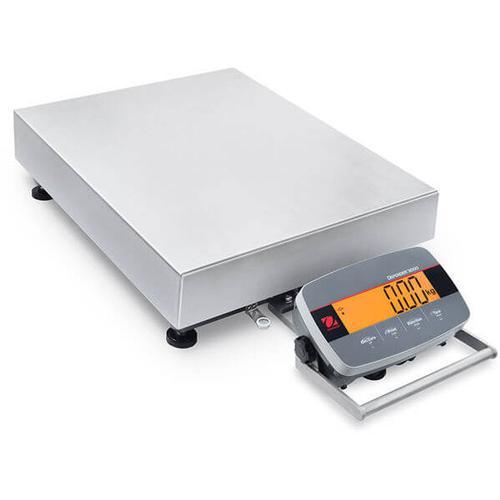
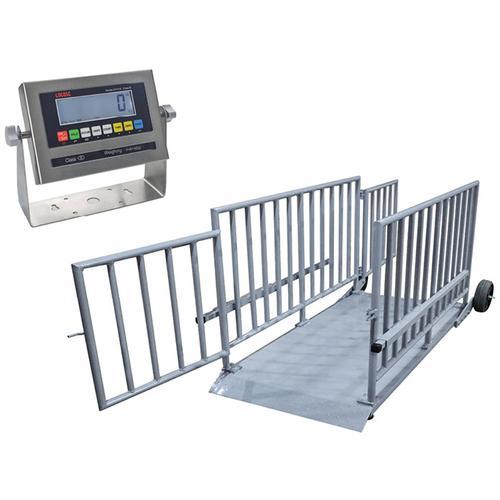
A platform scale is a self-contained weighing deck the animal walks onto. It is the obvious choice if you have nowhere else to weigh, if you weigh animals you do not otherwise run through a chute, or if weighing is frequent enough to justify dedicated equipment. Structurally it is close to an industrial floor scale, built for a different kind of load.
Load bars are a pair of weigh beams that mount underneath equipment you already have. Fit them beneath a squeeze chute, a crate, or a pen section, and the thing becomes a scale. The advantages are real: no extra footprint in the working facility, lower cost than an equivalent platform, and the animal is weighed at a point in the handling sequence where it is already restrained and standing still. If you already work cattle through a chute and want weights as part of that pass, load bars are usually the better buy.
The trade-off is that load bars tie weighing to whatever they are mounted under. If the chute is busy, or the animals you want to weigh do not go through it, you are back to needing a platform. Some operations end up with both for that reason.
Sizing the platform by species
Platform size is set by the footprint of the animal standing square, with room to spare on all sides. It is not set by weight, and this is where sizing goes wrong most often. An animal that overhangs the deck does not distribute its weight across the load cells the way the scale was designed for, and the reading suffers. Worse, an animal that cannot stand square will not settle, which makes every other accuracy problem harder.
The practical implications by species:
Cattle A mature animal needs a deck long enough to stand naturally without bridging front to back, and side containment so it does not turn. This is the case that drives most platform sizing, and where buying short is most tempting and least forgiving.
Hogs Shorter and lower than cattle, and considerably more determined about leaving. A hog scale is usually a crate or a penned platform rather than an open deck, and the containment matters more than the deck area.
Sheep and goats Small footprint, low weight, often weighed in groups through a chute. The temptation is to use the large scale already standing there, and the problem is division size: a high-capacity deck reads in increments too coarse to be useful on a 90 lb animal. A sheep scale or goat scale sized to the animal is a real requirement, not a refinement.
Horses Long footprint, and different handling. Horses are led on rather than driven, and they will refuse a deck that moves, sounds hollow, or has a lip at the entry. A horse scale wants a low profile and a solid feel underfoot more than anything else on this list.
Calves and small stock Low capacity and fine division size. A calf scale is frequently the same equipment a veterinary practice would use, so the veterinary scales for smaller animals range is often a better fit than anything built for the herd.
If you handle more than one species, size for the largest and check the division size against the smallest. Where those two requirements cannot be met by one scale, they cannot, and two scales is the answer.
Cages, gates, and keeping the animal on the deck
A bare deck is not a working scale. The containment around it is what turns a weighing platform into something that works at the speed of a working facility.
Side panels or a full cage stop the animal turning or stepping off mid-weighing. Entry and exit gates control the sequence, and whether they are at the same end or opposite ends decides how the scale fits into the flow of your handling yard. A single-ended setup means backing animals out; a through setup needs clear space at both ends. Measure the alley before ordering, because this is the constraint that catches people.
Ramp angle and entry height are the other half. An animal that hesitates at the entry costs time on every head, and hesitation is usually a response to a step up, a gap it can see through, or a surface that sounds different. Low-profile platforms and platforms with built-in ramps at both ends exist to solve exactly this, and they earn their cost back in animals per hour rather than in the purchase comparison.
Why NTEP certification matters when weighing livestock for sale
There are two kinds of weight in a livestock operation, and only one of them needs a certified scale.
Management weights are the ones you take for yourself. Tracking average daily gain, deciding when a pen is finished, dosing by weight, monitoring a sick animal. Nobody outside the operation relies on these numbers, and no certification is required to take them. A well-specified uncertified scale is entirely adequate here.
Commercial weights are the ones that determine what someone pays. The moment weight sets price, the scale becomes a measuring instrument used in trade, and in the United States that means it generally has to be certified for commercial use and verified by your state weights and measures authority. This is a legal requirement rather than a quality judgment, and it is not satisfied by a scale that happens to be accurate.
The practical reason this matters at the buying stage rather than later is that certification narrows the equipment list before you start. Certified systems are a subset of what is on the market, they cost more, and they carry ongoing verification obligations. Discovering the requirement after purchase means buying twice.
If you sell direct by the pound, if you buy stock by weight, if you settle with a feedyard or a processor on weights taken on your own equipment, the answer is yes. If you are selling through a sale barn that does its own weighing, it is usually no, and your scale is a management tool.
The certification program, what the marks mean, and why the requirement exists are covered in detail in our explainer on what NTEP certification means and why you need it. On the equipment side, our legal for trade scales are the systems built and approved for this use.
Manure, washdown, and outdoor siting
Scales in a livestock facility sit in one of the more hostile environments equipment gets specified for, and the failure mode is almost always corrosion rather than overload.
Manure is wet, it is chemically aggressive, and it gets into everything. Add washdown, and the load cells, junction box, cabling, and indicator all need enclosure ratings that match. A deck that handles the weight fine will still fail early if water tracks into a junction box, and that is the most common way these systems die.
Cable routing deserves specific thought, because it is the part people leave to the installer. A cable run where animals can stand on it, or where a tractor bucket passes, is a cable that gets replaced. Route it protected, and specify the enclosure rating on every component rather than only on the deck. Our explainer on IP ratings covers how to read those figures and what the digits mean.
Siting matters too. An outdoor scale needs drainage, a level base that will stay level through a wet season, and ideally somewhere the sun does not sit on the indicator head all afternoon. Temperature swings shift readings, and a display you cannot see in direct light is a display nobody uses properly.
Getting a steady number from a moving animal
This is the most useful thing on the page, and the thing product listings never mention.
An industrial scale weighs a load that sits still. A scale in a working facility weighs a load that shifts weight from foot to foot, leans on the cage, and occasionally attempts to leave. The raw output from the load cells under a moving animal does not settle, and a display showing raw output will simply run numbers until the animal stops moving, which it may not do.
The answer is in the indicator, not the deck. Livestock indicators include hold or averaging functions that sample the load over a window and lock onto a settled figure, filtering out the motion. Different manufacturers name it differently and implement it differently, and the quality of that filtering is a large part of what separates a scale that works at working speed from one that holds up the crew.
When comparing systems, ask specifically about motion handling rather than only about accuracy specifications. If you are working out how to weigh cattle without holding up the crew, a coarser scale that locks on in two seconds beats a finer one that never settles.
The same logic applies to keeping the system honest over time. Calibration drifts with temperature, mechanical stress, and debris accumulation, and checking it means applying known reference weights rather than an animal you think you know the weight of. Certified calibration weights are what that check requires, and where the scale is used commercially the verification schedule is not optional.
Portable or permanent
The last decision is where the scale lives.
A permanent install makes sense where weighing happens in one place as part of an established handling sequence. It can be set into a concrete pad, integrated into the working facility, and left. Fixed installs tend to be sturdier, easier to keep level, and less prone to the alignment problems that come with moving equipment around.
A portable setup on a skid frame or trailer suits operations running stock across several places, leased ground, or seasonal pens. It goes where the animals are, which for some outfits is the difference between weighing regularly and not weighing at all. The costs are real: more setup time per use, a base you have to make level wherever you land, and equipment that takes more abuse in transit than in service.
The question to ask is not which is better but how often you will actually weigh. A portable system used monthly across four locations earns its compromises. A portable system that ends up parked in the same spot for two years should have been a fixed install.
FAQs
Common questions about choosing and using a livestock scale.
How much does a livestock scale cost?
Cost is driven by capacity, platform size, whether the system is a full platform or a set of load bars under existing equipment, and whether the scale is certified for commercial sale. Load bars under a chute or crate you already own are the lower-cost route. A standalone platform with cage and gates costs more and handles more animals per hour. Specify capacity, platform size, and certification need first, then compare within that narrowed set.
What is the best way to weigh cattle?
For mature cattle the practical choices are a full platform scale sized to hold one animal with room to stand square, or load bars fitted beneath a squeeze chute you already use. Ranches that weigh at working time usually prefer load bars under the chute, because the animal is already restrained. Operations that weigh often, or weigh animals they do not otherwise process, tend to get more use out of a dedicated platform with a cage.
How accurate are livestock scales?
Accuracy is stated as a division size, the smallest increment the display shows, and it scales with capacity. The bigger limit in practice is the animal. A shifting animal produces a moving load, so a livestock indicator needs a hold or averaging function to settle on a figure. Without it, a mechanically accurate scale still gives you a number that will not sit still.
Do I need a certified scale to weigh my own animals?
Not for management weights taken for your own records, such as tracking gain or dosing by weight. Certification becomes a requirement when the weight determines what someone pays. If you sell direct by the pound, the scale generally has to be certified for commercial use and verified by your state weights and measures authority.
Related Articles
26-Aug-26
Buy American Act vs Trade Agreements Act - How Scale Purchases Are Affected
Federal procurement rules can stall a straightforward scale purchase when the wrong compliance framework is applied from the start. Whether you are outfitting a receiving dock, a warehouse floor, or a production line under a government contract, understanding the difference between the Buy American Act and the Trade Agreements Act determines which products you can buy, from where, and through which purchasing channels. ...
25-Aug-26
Best Scales for Military Bases, Depots, and Logistics Centers
Military installations move a constant flow of supplies—ammunition, parts, fuel-related materials, food service loads, and outbound shipments—often under tight timelines and strict controls. Choosing the right military base scales isn’t just about capacity; it’s about meeting DoD scale requirements, maintaining accuracy in harsh environments, and simplifying procurement. ...
29-Jun-26
Common Mistakes Agencies Make When Purchasing Scales on GSA.gov
In today’s procurement-driven environment, purchasing agents for government agencies must be vigilant, especially when procuring scales through GSA.gov. While GSA contracts streamline the buying process, ensuring compliance, accuracy, and proper product selection is still crucial Below, we’ll discuss common scale purchasing mistakes on GSA Advantage and provide insights to avoid procurement pitfalls. ...
29-Apr-26
What Documentation Government Buyers Need When Purchasing Scales
Here is a clear checklist of the most common government scale purchase documentation that agencies request, including GSA scale documentation requirements, scale compliance documentation government expectations, and calibration documentation government scales best practices ...
16-Mar-26
GSA Scale Vendors: What to Look for Before You Buy?
Learn what to look for in GSA-approved scale vendors. From compliance and GSA contract coverage to post-purchase calibration support, discover the key factors to consider before you buy industrial scales for government use. ...
09-Mar-26
GSA-Approved Scales: What Compliance Requirements Matter Most?
Purchasing scales for government use isn't as simple as picking a reliable product off the shelf. Compliance requirements for GSA-approved scales are strict to ensure accuracy, reliability, and adherence to federal guidelines. Whether you're looking for NTEP-certified scales, NIST compliance, ISO certifications, or navigating the Buy American Act and TAA requirements, understanding these standards is essential. ...
17-Feb-26
How to Justify a Scale Purchase in a Government Procurement Request
Government agencies purchase scales for a wide range of operational needs — from logistics and warehousing to inspection, manufacturing, and regulated environments. However, unlike commercial purchases, government acquisitions must be clearly justified, properly documented, and aligned with applicable compliance standards. ...
28-Nov-11
HLWP IP65 Waterproof food service Scale
AND is renowned for its innovations and quality products used in science, medicine, research, and the home. The AND Weighing Division is an ISO 9001 certified company ...
15-Nov-11
Sartorius M-PROVE line of economical portable balances
Sartorius, a leader in laboratory mechanics for over a century, has recently introduced a line of economical portable balances called the M-Prove series. The M-Prove balances were developed to be accurate for use in laboratory applications yet rugged enough to take on the road. ...
14-Nov-11
Ohaus Scout Pro line of scales
The Ohaus scout pro has been one of the longest and best selling scales for portable and stationary weighing. ...